“It is our very search for perfection outside ourselves that causes our suffering.” ~The Buddha

Tuesday, 18 March 2014

Save our Planet

By: Felicitas Binan

Every time we hear the term “global warming” we cannot help but  feel alarmed and  disturbed about the carbon footprint of  anything and everything around us. First and foremost concern that came into our mind is the future of our children, grandchildren and the future generation to come. Where will they be if our earth will be devoid of fresh water to drink, pure air to breathe, rivers and oceans and perpetual land to dwell in. There is still hope for a brighter outlook if all the citizens of this world will embrace the preservation of the earth and its species.
Focus ourselves on latest news and current events in what is happening around us, particularly on ecosystem. If you have extra time, take a walk in public parks, animal sanctuaries and nearby national parks. We can help conserve indigenous wealth through science, developed technology and simply by word of mouth. We can achieve this through tasking and environmentally friendly adaptations within our everyday living.
Initiating a green perspective in our own means we can contribute to a healthier future within our own homes by conserving power and water, and unplugging unused appliances. Keep air passages open to let fresh air circulate within your home instead of using your air conditioning. Drive less, waste less, and you will be on your way of reducing your carbon footprint significantly.
Lastly we can connect with different associations within our community that focus on earth and its preservation. Join tree planting drives, groups that focus on picking up litter, carpooling, and a lot more. We need to find all the means to become productive and concerned citizens of this planet, and truly promote and look for best care.

We must focus on the preservation of  the earth.


Saturday, 15 March 2014

An Environmental Story of Resiliency and Commitment

By: Jessica Robertson

The U.S. state of California has long been a leader in hydroelectricity production, but in 2013, a major drought dropped the state to its lowest levels of hydroelectricity production in over two decades. But, how did they manage to keep the power flowing without water? The state’s commitment to clean energy and a never-die spirit keep pushing them through with hardly a worry.
            Even though the drought has hit agriculture and water tables hard, the state can lean on its good planning, natural gas, and newly introduced renewable energy sources to keep the lights on. With prior experience in energy crises, California regulations do well to prepare for even the worst-case scenarios; so, spirits are high.
            The boost in renewable energy programs, like solar and wind power and even geothermal energy, has helped ease the burden of the drought. These new initiatives, specifically, have bolstered the energy-generation capacity; the pressure caused by the lack of hydroelectricity in the time of drought has amped up the importance and efficiency of these relatively new projects.  However, sunshine and wind cannot be called upon on a whim; natural gas has stepped in to provide the energy when the renewable resources cannot.
            Recent rain and snowstorms have hinted that the drought may be on its way out. However, the precipitation totals are incredibly lower than average, leaving a long way to go before danger is at bay and before energy costs can remain low. Experts say that even though the recent storms have brought much-needed relief, it may take up to a year to see real recovery. The state is hopeful that despite the drought, if it is here to stay, they can remain committed to clean and renewable energy. 


Friday, 14 March 2014

Feel the Knead

By: Kate Serrano
What is the first thing that comes to your mind when you are tired, stressed and you feel like you just got ran over by a herd of elephants? A massage! For many many years, massage therapy is practiced not only to relieve stress but also to improve health conditions. There are over 80 massage therapy styles to chose from, all of which includes pressing and rubbing muscles with hands and fingers.
 Most popular among the massage styles are Swedish, Thai, shiatsu, hot stone massage and reflexology. The health benefits of massage extend far beyond simple relaxation. For example, a study in 2003 revealed that massage worked better than acupuncture for lower back pains. It actually reduced the need for painkillers for about 36%. Headaches also respond better to massage therapy than medication.

Lastly, a massage helps relieve depression and anxiety; this was proven in more than 12 different studies. But what if you can’t get to a massage therapist? It’s pretty simple. Use your own hands. There are simple, self-massage techniques that can boost energy, concentration and help you get a good night’s sleep. If you think you have been staring at the computer for so long or have been pounding the keyboard the entire day, take a good 10 minutes off the screen and treat yourself to relaxation. Close your eyes. Place your thumbs under your eyebrows. Press and gently move the thumbs in tiny circles, work slowly towards the outside of the brows and continuing this movement all around your eyes, ending back at the bridge of your nose. For your tired hands rub each finger from the base to the tip, gently pulling and twisting each finger as you go. You can also squeeze and rub the palm with your fingers or your right thumb and you’re all set. Just remember not to cause yourself pain, a massage is meant to relax and release tension and not hurt in any way. Enjoy!


Wednesday, 12 March 2014

Up with Good Food, Down with Bad Livestock Practices


By: Jessica Robertson

A team of scholars at the University of Bristol’s School of Veterinary Science has begun to address the challenge of making ruminant livestock a sustainable part of the planet’s food supply. The challenge holds more difficulties than may first come to mind; with a growing worldwide population, a changing climate, and an astounding one in seven people malnourished across the world, the environmental and economic costs of current livestock-keeping practices are far too high. Ruminant livestock are a major contributor to total methane gas production annually, which is a strain on the environment; and, overall, they do not serve as a high quantity food producer, making them a poor choice for feeding a growing population. Honestly, current livestock practices end up taking more from the food supply and environment than they give. The academics offer eight strategies for improving the current practices to a more sustainable level and to boost the quality and quantity of overall food production. 
Keep human food for humans.
As of today, livestock consume about one-third of global cereal grain while that grain could act as a resource to feed people directly. Ruminant livestock can digest foods like hay that humans cannot digest, suggesting a more resourceful and efficient alternative.
Raise animals in their appropriate region.
Local breeds of livestock are appropriately adapted to their environment, translating into their optimal yields of milk. Costs and disease increase dramatically in breeds that are relocated, and their productivity declines proportionally.
Prevent animal disease.
Animal disease is a huge human concern; approximately 2.2 million people die annually from zoonosis (diseases that can be transferred from animals to humans). Assuring healthy animals by improving hygiene and surveillance can help control disease.
Implement appropriate supplements.
Using supplements to encourage the bacteria in the digestive systems of livestock can increase the animals’ nutrition and decrease their production of methane.
Keep quality above quantity.
Milk and meat may seem greedy options when considering how to provide food for a world population. However, including these animal products into a balanced diet in undernourished populations is a health benefit.
Fit practices to culture.
Nearly one-seventh of the world relies on livestock for their daily needs. Supplying not only food, but also wealth, status, dowry payments, livestock cannot always simply be replaced with industrial systems.
Record costs and benefits.
Even though livestock contribute to greenhouse gas accumulation, they can also contribute to biodiversity, a healthy ecosystem, and improved carbon capture by plants and soil due to their fertilization capabilities when grazing is managed sustainability.
Study best practice.
Research farms, a global network of them, purpose to evaluate the advantages of certain farming practices for the environment and economy. They are designed to serve as an example of responsible farming practice for both farmers and policymakers.
With these informative and thorough suggestions, hopefully sustainable changes can help make world hunger a thing of the past.


Tuesday, 11 March 2014

Higher Hopes for Better Water


By: Jessica Robertson

The number of techniques for assuring water quality is surprisingly high. However, without detailed testing within a laboratory, few techniques are capable of testing all the important parameters of what really constitutes quality water, but portable water quality tests give more accurate information on what the current state of the water may be.  Given the limitations of the portable tests, any particular test could pass water as drinkable when, based on incomplete information, certain pollutants could be present. This situation makes water quality a major issue for poorer communities who cannot afford laboratory analysis, or those who utilize a natural resource for their water supply.
             Using an existing technology known as UV-Vis spectrometry, which is often used in water testing, a team of researchers from North Carolina State University has created a set of algorithms that combines several testing parameters to increase the amount of and quality of information in each water test. Since UV-Vis spectrometry works by measuring the wavelength of light absorbed by the water, the technology capitalizes on its ability to collect data often, getting a reading as often as every 15 seconds, and over an extended time period. These are definite advantages over traditional water sampling, where a sample of water must be collected and analyzed in a lab setting. Typically, UV-Vis technology only measures a few key information points about water quality, but with the algorithms the researchers are using, the data is comparable to what could be done within a lab setting.

            Since the technique increases frequency of testing without eliminating accuracy, natural resource managers and those without laboratory access will be more assured that their sources are suitable for use, that treatments are appropriate, and that the population is not put at risk.  

Stresbusters

By: Kate Serrano
Man is adaptive by nature. We can live under any climate, temperature or circumstance and still survive. One of the factors that man is adaptive to is stress. Stress is nothing more than a force of nature that affects an individual. It may be external – getting all stressed out at work, relationships, home, or even a confrontation. It may also be internal – the amount of sleep or rest you get, emotional wellbeing or fitness status. Stress is a normal part of life. It can either help us grow or cause significant problems but for the most part, we view its more negative side. The most common way to manage stress is through exercise. It helps avoid prolonged stress by turning down the production of its hormones and neurochemicals. It’s an antidepressant at the same time. If you’re stuck with long hours at work, it is therefore important to take breaks – take a lunch break and not talk about work! Or take walk instead of a coffee break. You can use the weekends to relax, and not schedule so many activities that will tire you when Monday morning comes. Exercise nowadays may not be limited to the more physical activities. Meditation and other forms of relaxation techniques also have lasting effects on health. This is the reason why more and more people are signed up to yoga, pilates and the likes.       


So what is so bad about stress? Nothing, it’s more on how you manage it. By preparing yourself, you can turn stress into a positive force of growth and change.

Sunday, 9 March 2014

Connoisseurs of Comfort

By: Kate Serrano

There is always a good feeling about having pets around. Whether you are a cat or dog person, there are many ways on how pets help improve health. Pets are natural mood enhancers – just by watching a dog play or a fish swim can already make a person feel less stressed. This is the same reason why therapists prescribe a pet as a way of dealing with depression.
 Pets provide unconditional love and will listen to you talk for as long as you want to talk. Pets improve social interaction as they keep you engaged with others. A dog, for example, is a conversation waiting to happen. People stop and talk when they see someone walking a dog. And while socially uplifting, walking the dog also improves physical fitness. A good 30 minute walk or playing fetch will keep one moving, thereby meeting the minimum recommended physical activity for a day. Walking the dog also helps develop strong bones and prevent osteoporosis and painful fractures. It exposes you to sunlight, which is a good source of vitamin D. lastly, having a pet helps manage health conditions; owning a cat for example has long term health benefits.
In a study conducted for almost 20 years now, people who never owned a cat were 40% most likely to die of heart attack and have higher risks of cardiac diseases. And in another study, pet owners had lower blood pressure and heart rate than those without pets. Kids who grow up in homes with cats and dogs are less likely to develop allergies. Higher levels of immune system chemicals build a stronger immune system, keeping them healthy as they grow older.


So whether you consider having a dog, cat or even a hamster, it doesn't really matter. It’s already a good start to maintaining a healthy, happy life.

Saturday, 8 March 2014

Animal Protector


By: Daniela Silva
Pitbulls, known as one of the most aggressive and powerful breeds are consistently receiving a bad reputation, and many pit bull owners are denied homes or insurance due to the breed. With 238 psi pounds of force it is really easy to get carried away with fear, however this didn’t matter to Wilson Martins.


Living in Rio de Janeiro Brazil, Mr. Martins has dedicated his life to helping animals in dire need; taking  animals found in extreme situations, he provides medical attention, food and the care they are deprived of. Mr.Martins treats all his patients with the greatest medicine; love, and assures they are treated with the highest respect.  

Recently this man provided care to a pitbull that many would turn away in fear of the animals belligerence, however the unforgiving deteriorating conditions that literally eaten away the flesh of the poor animal. With time, the pitbull healed, and looks as though it has never been in harms way, you couldn't tell by its mentality nor were its previous gashes manifested. All it takes is common sense, a big heart and the ability to do something good.


Friday, 7 March 2014

A Man Worth Mentioning

By: Daniela Silva

A simple man from the outside; quiet and seemingly introverted, on the outside- just a custodian. English is a new language to this quiet soul,  his efforts to speak are intermittently discarded. Working day to night, this simple man blended into the heart of the building; But yet a simple day, where the wrinkles that lined the smile from his yesteryear's fell; a sudden revision came.

The man I worked with on a daily basis, no longer was a static character. A high school teacher of his was diagnosed of cancer back in his home country of Nepal, and with little money, life for the teacher became utterly unsustainable. To learn that this man I worked with gave a large portion  of his paycheck to his teacher, simply out of the good of his heart; is astonishing. The genuine nature of this is surreal in our world, and even though there is over 7,046 billion people in this world it is difficult to find a person capable of giving to those who really need it.

This man, is a man worth mentioning. Whether or not you see people demonstrating selfless acts, it is a rare art form lost sometime between the growth of technology, disrespect for others and the indulgence of gaining easy money. Have you made a change? or have you become deceased as all the others? Set yourself from the others.

Stand up. Take a chance. Make a difference.

France’s Newest Enemy


By: Jessica Robertson

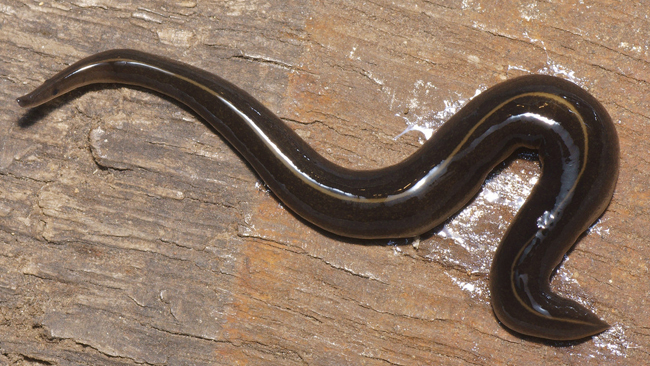
France has recently been invaded by a surprising foe – the New Guinea flatworm. Platydemus manokwari, as it is also known, is the only terrestrial flatworm on the list of the 100 most invasive alien species in the world, published by the Invasive Species Specialist Group (ISSG). The list details species that, due to the modern increase of globalization and worldwide trade, have entered a new habitat and caused harmful disruption in the ecosystem.
The New Guinea flatworm was found recently in a greenhouse of the Jardin des Plantes de Caen, and was definitively identified by its notable appearance and through special molecular analysis. These findings are no less than startling, considering this is the first instance of the species’ presence in all of Europe, not in France alone.
Snails are the main diet of this flatworm, which has been introduced in over fifteen Pacific territories, sometimes deliberately and sometimes not. The snail population in these Pacific territories has decreased significantly, causing a huge reduction in the genetic diversity of the numerous snail species. In the past, the flatworm was supposed to eradicate one particular harmful species of snail, promising better results in agriculture.  However, the serious threats of this invasive flatworm species far outweigh any ecological benefits it may previously been thought to have.

While the flatworm originates from the tropical country of New Guinea, it most often inhabits the cool mountain regions of the country, meaning it may easily adapt to the European climate. It is known to consume European snails, and, in the absence of snails, to consume earthworms. These predictions boast a surprising threat to biological diversity in France and all of Europe, where hundred of species of snails currently thrive. Now, before the flatworm continues in its conquest, is the time to eradicate the New Guinea flatworm from its new desired kingdom.