“It is our very search for perfection outside ourselves that causes our suffering.” ~The Buddha

Saturday, 8 March 2014

Animal Protector


By: Daniela Silva
Pitbulls, known as one of the most aggressive and powerful breeds are consistently receiving a bad reputation, and many pit bull owners are denied homes or insurance due to the breed. With 238 psi pounds of force it is really easy to get carried away with fear, however this didn’t matter to Wilson Martins.


Living in Rio de Janeiro Brazil, Mr. Martins has dedicated his life to helping animals in dire need; taking  animals found in extreme situations, he provides medical attention, food and the care they are deprived of. Mr.Martins treats all his patients with the greatest medicine; love, and assures they are treated with the highest respect.  

Recently this man provided care to a pitbull that many would turn away in fear of the animals belligerence, however the unforgiving deteriorating conditions that literally eaten away the flesh of the poor animal. With time, the pitbull healed, and looks as though it has never been in harms way, you couldn't tell by its mentality nor were its previous gashes manifested. All it takes is common sense, a big heart and the ability to do something good.


Friday, 7 March 2014

A Man Worth Mentioning

By: Daniela Silva

A simple man from the outside; quiet and seemingly introverted, on the outside- just a custodian. English is a new language to this quiet soul,  his efforts to speak are intermittently discarded. Working day to night, this simple man blended into the heart of the building; But yet a simple day, where the wrinkles that lined the smile from his yesteryear's fell; a sudden revision came.

The man I worked with on a daily basis, no longer was a static character. A high school teacher of his was diagnosed of cancer back in his home country of Nepal, and with little money, life for the teacher became utterly unsustainable. To learn that this man I worked with gave a large portion  of his paycheck to his teacher, simply out of the good of his heart; is astonishing. The genuine nature of this is surreal in our world, and even though there is over 7,046 billion people in this world it is difficult to find a person capable of giving to those who really need it.

This man, is a man worth mentioning. Whether or not you see people demonstrating selfless acts, it is a rare art form lost sometime between the growth of technology, disrespect for others and the indulgence of gaining easy money. Have you made a change? or have you become deceased as all the others? Set yourself from the others.

Stand up. Take a chance. Make a difference.

France’s Newest Enemy


By: Jessica Robertson

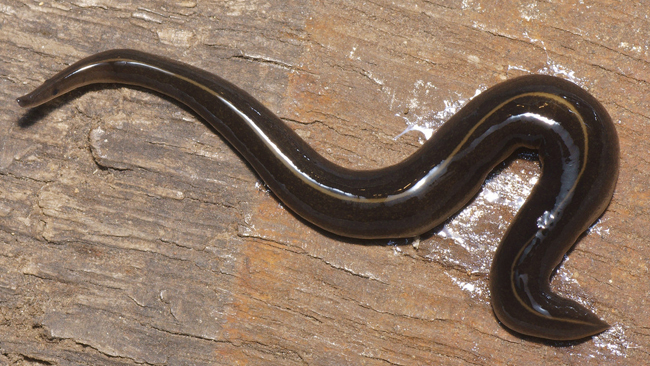
France has recently been invaded by a surprising foe – the New Guinea flatworm. Platydemus manokwari, as it is also known, is the only terrestrial flatworm on the list of the 100 most invasive alien species in the world, published by the Invasive Species Specialist Group (ISSG). The list details species that, due to the modern increase of globalization and worldwide trade, have entered a new habitat and caused harmful disruption in the ecosystem.
The New Guinea flatworm was found recently in a greenhouse of the Jardin des Plantes de Caen, and was definitively identified by its notable appearance and through special molecular analysis. These findings are no less than startling, considering this is the first instance of the species’ presence in all of Europe, not in France alone.
Snails are the main diet of this flatworm, which has been introduced in over fifteen Pacific territories, sometimes deliberately and sometimes not. The snail population in these Pacific territories has decreased significantly, causing a huge reduction in the genetic diversity of the numerous snail species. In the past, the flatworm was supposed to eradicate one particular harmful species of snail, promising better results in agriculture.  However, the serious threats of this invasive flatworm species far outweigh any ecological benefits it may previously been thought to have.

While the flatworm originates from the tropical country of New Guinea, it most often inhabits the cool mountain regions of the country, meaning it may easily adapt to the European climate. It is known to consume European snails, and, in the absence of snails, to consume earthworms. These predictions boast a surprising threat to biological diversity in France and all of Europe, where hundred of species of snails currently thrive. Now, before the flatworm continues in its conquest, is the time to eradicate the New Guinea flatworm from its new desired kingdom. 


Thursday, 6 March 2014

Life After Haiyan

By: Kate Serrano
It wasn't too long ago when typhoon Haiyan brought havoc to some parts of Southeast Asia. November 8, 2013 was when the world’s strongest storm hit the Philippines, leaving thousands homeless and dead. It has been three months since the storm, and we wonder how people have been coping and moving on. With the help of other countries, international and local organizations, relief efforts have been consistently sent to Tacloban City, where Haiyan has caused the most damage. Schools have been turned to evacuation centers, churches into large living space. Electricity and water supply is still unstable in some areas. Luckily basic needs as food, clothing and medicine are on supply and it is a normal sight to see military trucks pass by highways distributing goods to survivors. To date, people are rebuilding not only houses but also lives amidst the painful memories the storm has brought. The local and national government have laid out their large scale and small scale plans; infrastructure projects and rehabilitation programs are on top priority. Hopefully this is the first step to rebuild this once upon a time alive city.


For a third world country like the Philippines where even the employed can barely make both ends of a rope meet, it will take some time to put things back in order. The darkness isn’t over yet but life must go on. Haiyan may have trampled lives but it has made the courage and resiliency of the Filipino people a lot stronger.

Wednesday, 5 March 2014

Indifference is a Problem

By: Daniela Silva

A new commercial from Save the Children has been making its rounds around the web in providing insight on the very real situation going down in Syria. The video depicts a young girl, taking video snapshots in her day to day life. It gradually turns into havoc, despair, and tragedy as her normal childhood is turned into a terrible rendition of hide and seek. The war has unfortunately killed over 11,000 children, and many more may face this unimaginable demise.

So, before you press play, keep in mind that this sort of tragedy exists. Children also succumb to the war and terror that we as adults are responsible for. If your childhood didn't end like this, you really have a lot to be thankful for.


                                    I do not take any ownership of the video and its contents.

BPA Holds True Danger

By: Jessica Robertson

It’s in manufactured products everywhere, from the lining of metal food containers to dental composites, but suspicion continues to grow about the safety of biphenyl a, better known as BPA. Canada has already deemed it a toxic chemical, but the United States is taking its sweet time to address the dangerous compound. Some researchers attribute the dangerous characteristics of BPA to its chemical similarity to biological hormones, especially estrogen, androgen, and thyroid hormones. Since studies on rodents have already shown BPA to be linked to abnormalities like cancer and immune, reproductive, and brain function problems, the United States has extended the studies to include primates. In previous studies, BPA was shown to alter fetal development when rodent mothers were exposed daily to very low doses of BPA, which is cause for alarm and for further research.
Funded by the National Institutes of Health, a recent study on rhesus monkeys was considered to be a very similar model to what likely happens within the human system when a pregnant mother is exposed to BPA. Though the rhesus monkeys in the study were exposed to a level considered to be far less than the levels humans are daily exposed to, tissue samples showed damage to the mammary glands, the ovaries, the brain, the uterus, the lungs, and the heart in rhesus monkey fetuses whose mothers were exposed to BPA. It is likely that, often, actual human exposure to BPA is underestimated in both measured levels and in estimated danger. Not only does the study provide evidence that BPA does pass from mother to fetus, but it also provides evidence that BPA causes serious dangers for developing fetuses.

Hopefully the dramatic findings of this study encourage stronger regulations against such a ubiquitous but harmful chemical. 

Save Water ! But How?


By: Jessica Robertson

The vast majority of the water on our planet is not suitable for human consumption. Droughts plague a huge portion of the earth each year. Numerous countries share water with at least one other country, pushing nations closer to conflict as scarcity increases. For these reasons and more, most citizens of earth know that water conservation is important, but a recent survey showed that most of us don’t know how to save water.
The most efficient way to reduce personal water consumption, according to experts, is to improve efficiency in water-consuming household items, like toilets, washing machines and dishwashers. According to the survey conducted by a researcher at Indiana University, for most of us, the first changes we think of to reduce water waste include taking shorter showers, turning off the faucet while brushing our teeth, and making sure the sink doesn't drip. These small changes make a difference, truly; however, to make the biggest difference, the biggest issues must be addressed. Toilets use the highest volume of water daily overall, meaning, for example, if an old toilet is replaced with a water-efficient model, gallons upon gallons of precious water would be conserved.

Education and awareness are key in conservation efforts. The survey found that the majority of people underestimate gallons of water used in a particular activity by, on average, more than half. Educating populations on ways to save water and which activities use what volume of water could improve conservation efforts dramatically. Production of products such as coffee, rice, cheese, beer, and sugar requires an alarming amount of potable water, making efforts to improve efficiency in manufacturing crucial. While changes to this extent cannot be made on the individual or household level, awareness of the vast amount of water being consumed, even indirectly, serves as a great motivator in our quest to save water for tomorrow and the next generation.


Tuesday, 4 March 2014

Keep Calm and Love Monkeys

By: Kate Serrano
Approximately an hour from Kuala Lumpur, Malaysia we see an interesting series of caves dedicated to Lord Murugan, the Hindu god of war and victory. The first thing that greets tourists when getting there is the tallest statue of the deity followed by a 272-step staircase that you have to climb to get to the cave’s entrance. More interestingly as you make your way through the steep steps you meet a few playful and cheeky friends; quite a handful of macaque monkeys have made this place their home.
 Some would be scared as they may jump off bags and steal food. They can also hurt you when threatened so the best advice: keep calm. Macaques are the most widespread of their kind, living in different habitats all over the planet. It is fascinating to know too that these monkeys are not only found in natural habitats like the Batu caves. They also abound in zoos, kept as pets and in research facilities. Yes, these monkeys have been a great help to science in medical and biological research.
 Apparently humans and macaques are 93% similar in DNA structure so thanks to these primates, the development of vaccines for smallpox, tuberculosis, rabies and polio are made possible. And in more recent studies, macaques have been tested for advanced AIDS research.
 It will not be surprising to know that there may be a cure to almost anything in the future! However, along with these medical advances and health benefits come research ethics and conservation issues. The question of the exposure of animals to harm and the depletion of their wild population are just some of the things brought up on the table. At this point, public support is much needed to break the barrier of pros and cons. How do we balance out care for animals and care for humans? Simple answer. Social responsibility.

Sunday, 2 March 2014

A Closer Look at the Lotus

By: Kate Serrano

Probably the best attraction in a pond would be a lotus flower. Nelumbo nucifera, as it is scientifically known, grows above the water with its leaves floating on the surface. In the olden times, Egyptians use it to symbolize the sun, creation and rebirth. In Buddhism, it symbolizes awakening and faithfulness. To date, the lotus is also a very popular tattoo. But there is more to the flower than meets the eye. How many of us know that this flower – in all of its parts – has varied uses? Here is to name a few.

The lotus is found to have astringent qualities, helping improve skin complexion. This explains skin care products and herbal teas with lotus variants. Many centuries ago, lotus leaves are made to paste and then applied to the body to treat skin conditions.

The lotus sap, those in its leaves, stems and flowers have anti-bacterial components for treating bacterial infections and bleeding disorders. It is also used to treat sexually transmitted diseases. Petals and seeds are mixed with honey to heal cough while the leaves are for treating diarrhea, rectal prolapse and dizziness. Lotus flowers are prescribed to promote conception and in some countries, the seeds are taken orally for seven days to increase fertility.

But wait, there’s more!

Given that the entire flower is edible, the lotus has many culinary uses too. Flowers and petals are used as garnish, while the leaves are for wrapping food. Roots are used in pickles and sometimes as a stir-fry ingredient. Asian dishes especially salads and prawns could have some lotus parts with it, most of the time with roasted or candied seeds.


With its beauty and timeless significance, the lotus is a wonder to behold.


Saturday, 1 March 2014

An Ideal Leader.


By: Daniela Silva
As an expansive species, it is easy to overhear others intentions for good in this life, but not many truly become motivated enough to achieve and conclude what they strongly believe should transpire within this world. One man has become an ideal example of an individual who has acted beyond sole opinions and has done a prodigious act; Jose Mujica the president of Uruguay has kept himself within a lower social standard to better impact his people.
At the ripe age of 77, Mujica was elected in 2009 of the second smallest nation in south america; however the riches that follow with a presidential life was of no interest to this palpable man, he had better things to do.
Ingloriously living within a farmhouse with his wife, Mujica has donated 90% of his salary to charities and lives his life completely satisfied, assured that he does not need more than the $1,250 of $12,500 he keeps to maintain and appreciate a modest life.
“I do fine with that amount; I have to do fine because there are many Uruguayans who live with much less,” Jose told the paper. He keeps his focus on guiding and providing aid for the poor and supporting entrepreneurs. Thinking and acting beyond temporary pleasures by consumer-driven living, this mans heart goes out to all of his people, knowing that an outstanding way to help the people is to provide the change that can better the standard of living.
“This is a matter of freedom,” he told BBC News. “If you don’t have many professions then you don’t need to work all your life like a slave to sustain them, and therefore you have more time for yourself.” Mujica’s passionate examples for change isn't limited to what he shares with those around him; instead, he’s also anticipating a change by impressing his altruistic ideology to other world leaders.
His doctrine on poverty and consumer expenditure was contributed at the Rio +20 United Nations Conference on Sustainable Development in June. “If all I’m doing is working to buy things to get more, if society of consumption is the energy of everything, where does this go?” he asked. “We need to start to fight for another kind of culture.”
Mujica has openly implicated that other world leaders possess a “blind obsession to achieve growth in consumption”, the president is undoubtedly in opposition to this left-brained obsession of presidential riches with no regards to the working people beneath it all. His argument draws in environmental factors and respect from societies that are governed by its many leaders.
His ‘poor’ lifestyle has gained criticism to which Jose defended with a conscious remark, “I’m called ‘the poorest president’, but I don’t feel poor. Poor people are those who only work to try to keep an expensive lifestyle, and always want more and more”.
Thanks to Jose’s influential leadership, Uruguay is now considered a nation of gracious change; becoming one of the first nations to legalize Marijuana and a nation that is determined to ensure that all of its people are taken care of, many more positive changes are sure to be implemented.
In Jose Mujica’s logic, as a society can we reach out to our governments and ask them to slowly but surely follow Jose’s lead? Can you achieve your own selfless intentions and make a  difference in your community?